Product Evidence
Product Conformity, Technical Evidence and CBAM Readiness
Structured control of technical files, conformity evidence and product-linked data where customs, regulatory and commercial claims need to stay aligned.
Why this topic belongs in trade governance
Product conformity becomes commercially relevant when technical evidence, customs treatment, market claims and supplier data need to support one another instead of sitting in disconnected files.
For many businesses, the problem is not lack of documents in the abstract. It is that certificates, declarations, technical files, product specifications, supplier evidence and carbon-related data have been assembled for different audiences and cannot be defended as one coherent record when customs, a customer, internal audit or a regulator asks for the same story in a different form.
CSA Nexus helps structure that evidence so the product record remains usable across cross-border trade, commercial disclosure and governance review. This includes traditional conformity topics, corporate trust documentation and emerging product-data burdens such as CBAM-linked information where technical and commercial consequences now intersect more directly.

Evidence only helps when the file tells one coherent product story.
Technical files, declarations, supplier evidence and CBAM-adjacent data often exist, but not in a form that can be reused cleanly across customers, regulators and internal review.
Core workstreams
The aim is to make product-linked evidence easier to retrieve, easier to validate and less likely to collapse under customer, regulator or border-facing pressure.
Technical file discipline
Structuring declarations, certificates, test evidence, specifications and release documents so the business can respond with a coherent file rather than rebuilding the answer every time.
Commercial trust packs
Organising the recurring documents that customers, partners and procurement teams ask for, from ISO and compliance records to data privacy, security and product-support evidence.
CBAM and data-readiness
Helping businesses create a defensible collection process for embedded-emissions information, supplier inputs and reporting logic where product and trade obligations now overlap.
CBAM as an evidence problem
CBAM is not just another reporting acronym. It forces businesses to connect product scope, supplier data, embedded-emissions assumptions, documentary traceability and financial exposure in a more structured way. Where that connection is weak, the organization ends up chasing data late, relying on untested supplier submissions or creating reporting files that cannot be defended confidently.
The practical task is therefore to define which products fall into scope, which suppliers need to provide what, how the information is checked and who owns the reporting logic once the business moves from transitional collection to more financially significant compliance stages.
Why the governance lens matters
Product conformity topics are often handled as if they belonged only to engineering, quality or sustainability. In practice, they can influence customs treatment, customer commitments, commercial negotiations and internal accountability. The same file may need to support a market-surveillance question, a procurement due-diligence request or a trade-related documentary review.
That is why we present this service as a control and evidence discipline rather than a collection of isolated certificates. The client value lies in having a product record that remains coherent across functions and over time.
Recovered product evidence frameworks
The missing legacy structures for CBAM, trust-center evidence and technical conformity are now back in the served markup, integrated into the newer CSA layout rather than replacing it.
CBAM: The New Carbon Ledger
The Carbon Border Adjustment Mechanism transforms environmental data into financial liability. We manage the full Green Trade lifecycle for steel, aluminium, cement and fertilizers.
1. Data Extraction
Requesting embedded emission data (tCO2e) from non-EU suppliers.
2. Calculation
Determining total direct/indirect emissions and deducting local carbon price paid.
3. Reporting
Quarterly filing to the CBAM Transitional Registry (XML/Excel).
4. Surrender (2026+)
Purchasing CBAM certificates pegged to EU ETS weekly averages.
The Corporate Trust Center
We help you structure a centralized repository for compliance data, reducing sales friction in B2B transactions.
- Certifications: indexed access to ISO and recurring product-support evidence.
- SOC 2 Reports: controlled workflows for NDA-protected security material.
- Data Privacy: GDPR packs, DPA templates and supplier-facing privacy evidence.
Technical Conformity (CE/UKCA)
Transitioning from static PDFs to structured technical data.
Interactive Specs
Populating Product Detail Pages with live data: voltages, dimensions and protocol compatibility.
Digital Twins
Embedding WebGL/BIM viewers for complex engineering projects, allowing clients to inspect as-built conditions.
Product evidence framework
The page now makes the evidence architecture more explicit so technical files, commercial trust packs and CBAM-adjacent data read as a real control model rather than a broad topic list.
| Evidence domain | Typical weakness | What stronger governance changes |
|---|---|---|
| Technical files and declarations | Certificates, declarations, test evidence and specifications exist, but not in a version-controlled file that can be reused coherently across customers, customs or regulators. | The business gains a more durable product story with clearer ownership, refresh rules and better confidence when repeated requests arrive from different audiences. |
| Supplier and product evidence | Supplier submissions, conformity documents and technical attributes are collected reactively, so gaps only surface when the product is already under external review. | The mandate creates a better collection rhythm and a clearer distinction between what is acceptable evidence, what remains provisional and what blocks release or disclosure. |
| CBAM and carbon-linked information | Embedded-emissions data, source assumptions and reporting ownership are not tied tightly enough to the underlying product and supplier record. | The client gets a more defendable bridge between product scope, supplier input, reporting logic and future financial exposure. |
| Commercial trust requests | Sales, procurement and customer-success teams repeatedly rebuild near-identical trust packs because the evidence layer has no reusable structure. | Stronger documentary governance reduces repeated rework and makes technical trust questions easier to answer without destabilising the operating team. |
Scope map and technical-file lifecycle
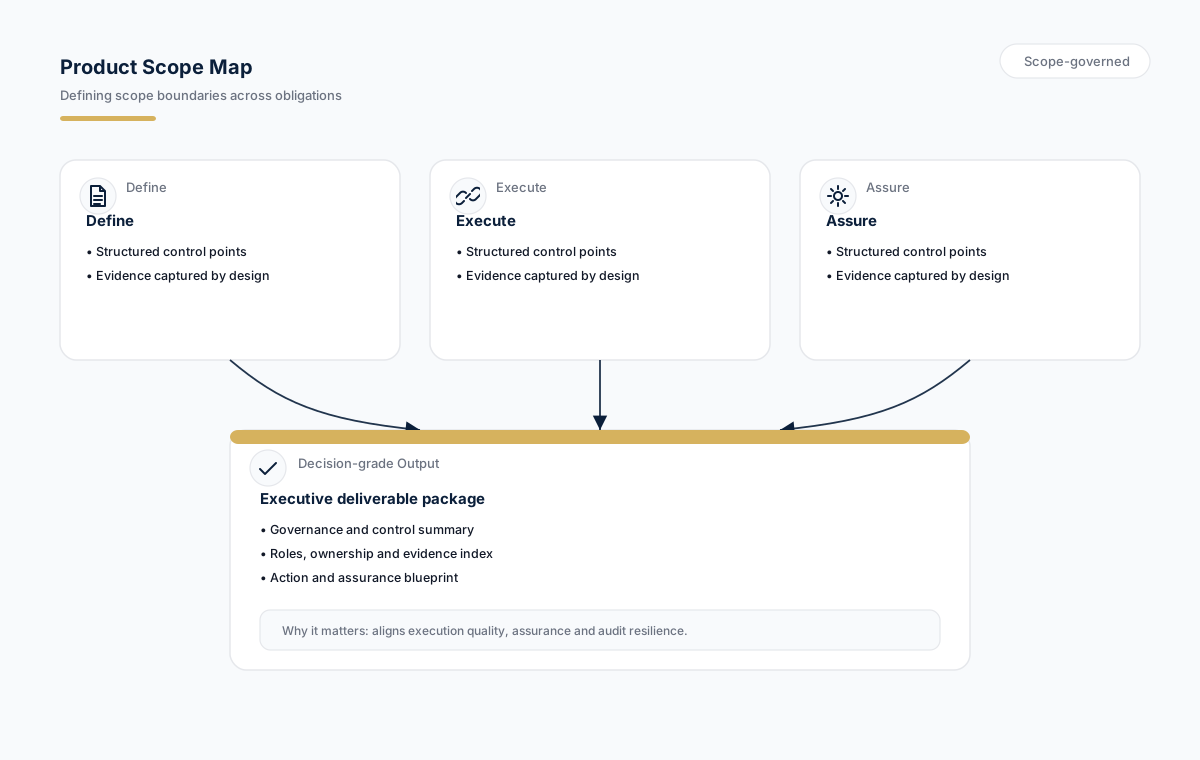
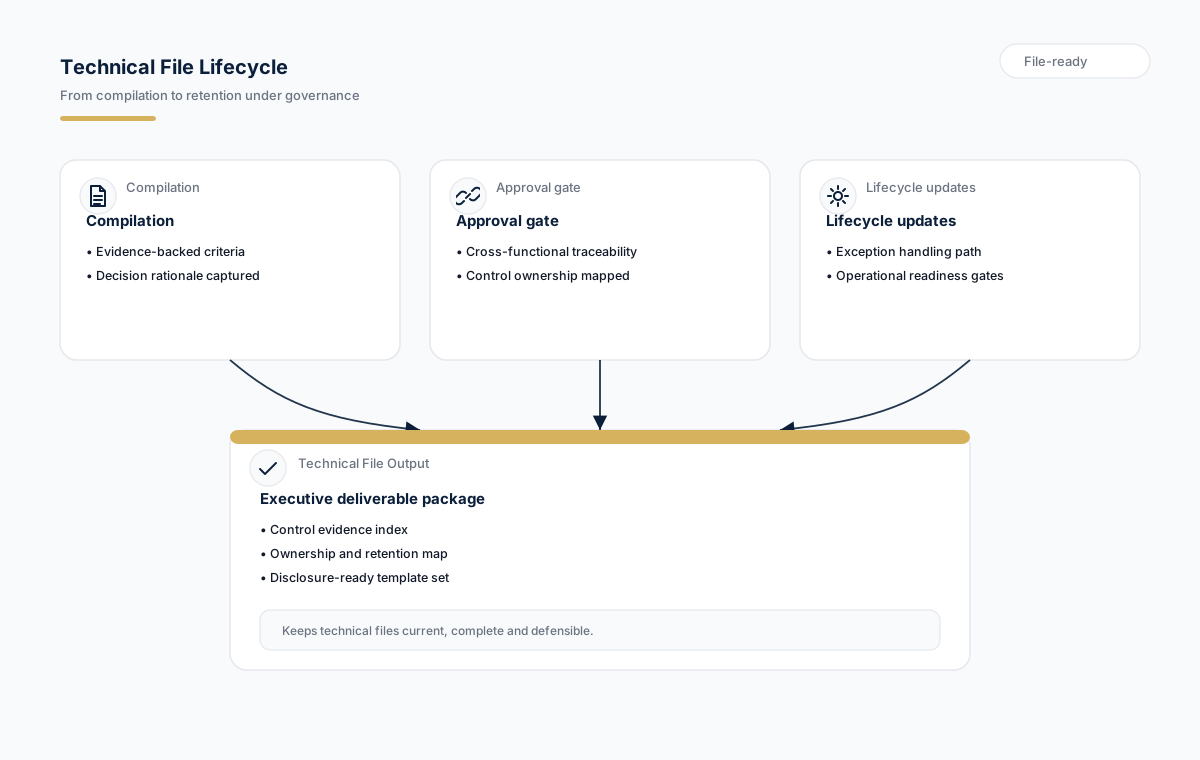
Product compliance is increasingly intertwined with customs and supply-chain decisions. Restrictions, labelling obligations, and technical files do not sit in isolation: they depend on accurate product data, supplier evidence, and controlled change management. We help organisations map the applicable regimes to their product families, build a technical-file lifecycle from requirements to review and publication, and connect it to procurement and logistics workflows.
The key is defensibility: you can show what was checked, which evidence was used, and how changes were approved over time. This reduces seizure risk, speeds customer requests, and supports cross-functional governance without heavy bureaucracy.
Why it matters operationally
Weak product evidence creates repeat requests, delayed responses, inconsistent customer messaging and avoidable internal friction between compliance, sales, quality and trade teams.
What clients should expect
A cleaner technical evidence architecture, clearer response logic for external requests and stronger discipline on which records are current, approved and reusable.
Where it connects
Origin, classification, sustainability reporting, customer onboarding and customs documentation all become easier to defend when the product evidence layer stops being fragmented.
Where this sits inside Trade Compliance
This page is part of the wider Trade Compliance pillar on the site, which includes REACH, RoHS, CE/UKCA, CBAM, SPS and other product-regulatory layers where border treatment, documentary quality and commercial commitments need one coherent record.
How clients usually engage it
Product evidence mandates can begin as a diagnostic or technical deep dive, become a structured remediation project or sit inside retained support when the business needs recurring governance over product files, supplier evidence and customer-facing trust packs.
Need a stronger product evidence model for customer, regulatory or CBAM-facing demands?
We help organise the file architecture behind technical conformity, recurring trust requests and product-linked trade evidence.
Chemicals and hazardous-substances perimeter
This perimeter is commercially relevant because chemicals, hazardous-substances and environmental product regimes change what can be shipped, what must be declared and which evidence must exist before release.
| Regime family | What it changes operationally | Evidence and border implications |
|---|---|---|
| REACH and CLP | Classification, substance communication, SDS discipline, SVHC visibility and downstream-use assumptions affect product release and commercial statements. | Technical file, supplier declarations, SDS, composition visibility and documented rationale for product-scope treatment. |
| Biocides, PIC and POPs | Product legality, active-substance status and cross-border authorization logic can change whether the movement is even commercially viable. | Authorization records, export notifications, product scope checks and evidence that the product claim matches the legal pathway used. |
| Mercury, F-gases and ODS | Quota, product-scope and substance-control logic may directly affect import permissions, declarations and customer commitments. | Quota or permit support, product technical attributes and a more explicit linkage between engineering data and border statements. |
| Explosives precursors, drug precursors and waste shipments | Controlled use, route sensitivity and documentary oversight move these flows out of standard product-compliance handling. | Permit chain, notification logic, consignee validation, waste-shipment controls and authority-facing documentary governance. |
Chemical evidence ownership
The strongest file links formulation, SDS, supplier evidence and product claims to one governed product record rather than leaving each document in a separate team silo.
Waste and circular flows
Waste-shipment work requires route, consignee, notification and consent logic that can withstand environmental scrutiny as well as border review.
Controlled-substance escalation
Where controlled substances or precursors are involved, the release model should show exactly when operations stop and when specialist review takes over.
Product safety, conformity and EPR completion
Conformity is not only a technical-file topic. It can shape border release, importer obligations, customer disclosures and the operating burden that follows the goods after import.
GPSR, CE/UKCA and technical-file governance
The file should show who qualifies the product, which standards or directives apply, what testing exists and how importer or responsible-person obligations are met.
- GPSR product-safety readiness and post-market accountability.
- CE / UKCA scope mapping, declaration discipline and change control over technical files.
- RoHS and adjacent technical restrictions translated into supplier-evidence governance.
WEEE, batteries and packaging EPR
Extended producer responsibility should be visible as an operating burden attached to product, importer and market-entry choices, not treated as an after-import administrative footnote.
- WEEE and battery obligations tied to product families, data owners and local registration logic.
- Packaging EPR linked to importer models, distribution footprint and downstream reporting responsibility.
- Governance that keeps product, sustainability and finance information aligned as volumes grow.
Sustainability at the border
Beyond CBAM, sustainability now changes product evidence, environmental controls and importer obligations in ways that affect release logic and long-term governance.
| Theme | How it affects cross-border trade | What a stronger file includes |
|---|---|---|
| CBAM and carbon-linked evidence | Embedded-emissions data and reporting logic move environmental exposure into the commercial and border file. | Supplier data collection, scope map, reporting ownership and review controls over underlying assumptions. |
| Environmental product controls | Substance, waste and environmental restrictions can alter importability, distribution plans and documentary risk. | Product-scope rationale, permits or notifications, and a clearer operating view of who validates environmental claims. |
| Lifecycle accountability | EPR and product-safety burdens can reshape importer, distributor and after-market obligations. | Registration logic, local accountability map, volume tracking and a link between product master data and downstream reporting. |