Service Line
Export Controls and Sanctions
Licensing, sanctions, extraterritorial controls and escalation governance across EU, UK and US-facing activity where the control record has to survive scrutiny.
Why this page goes beyond list checking
Export controls work becomes commercially serious when product scope, customer profile, route logic and management decision rights have to stay aligned under time pressure.
For many businesses the technical rule is not the only challenge. The real difficulty is maintaining a clean decision chain when EU dual-use requirements, UK sanctions expectations and US extraterritorial exposure touch the same transaction. Screening outputs, product classification, end-use review and licensing assumptions need to support one another instead of sitting in separate files and teams.
CSA Nexus helps clients structure that chain so the release decision is explainable, the escalation threshold is visible and the resulting record remains usable months later in audit, internal review or regulator-facing dialogue.
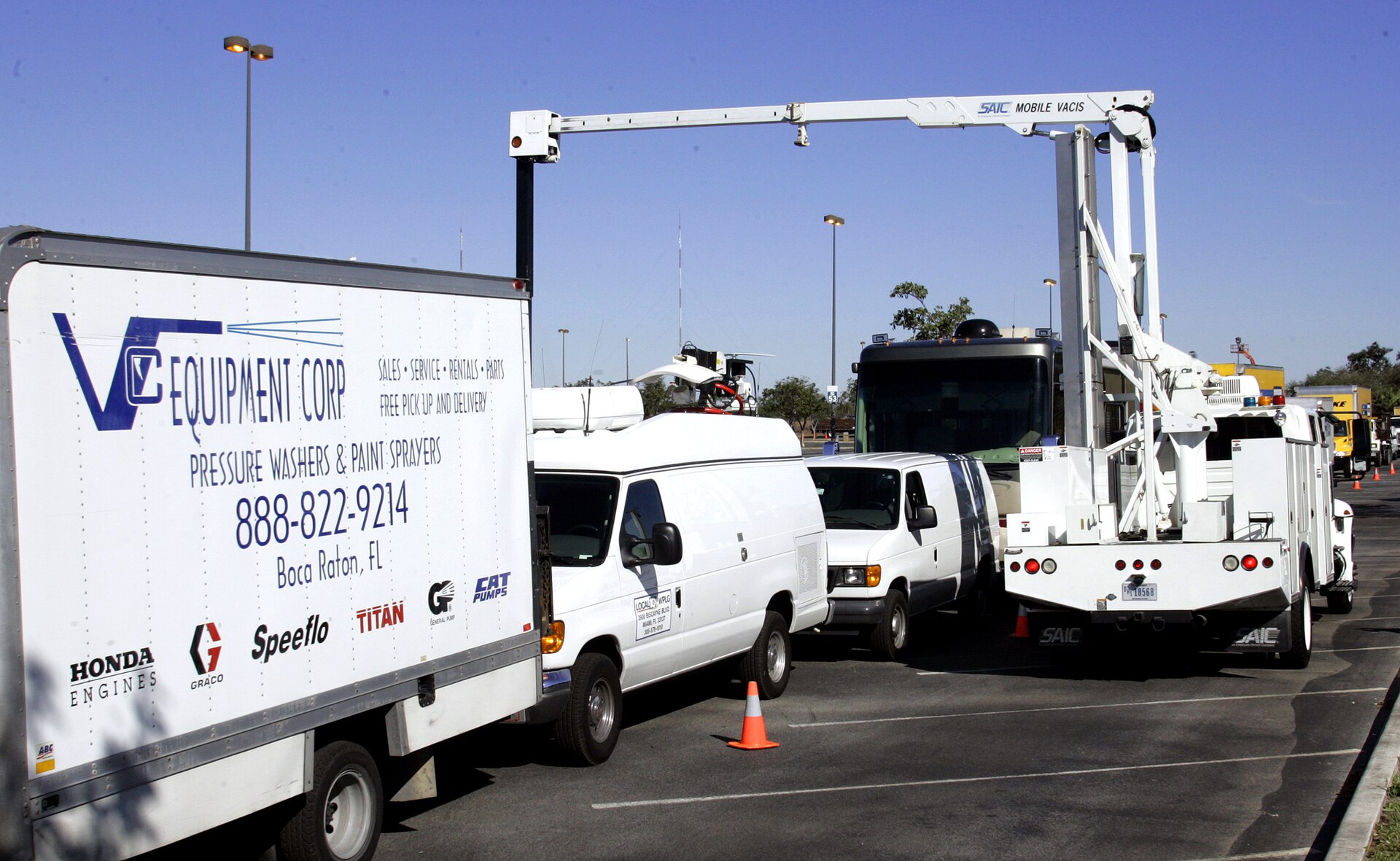
Where the control model usually fails first.
Classification and licensing logic detached from the transaction flow, sanctions checks that ignore ownership and route context, and records too thin to survive later scrutiny.
Core workstreams
The objective is to convert a fragile control surface into a repeatable release model that protects legitimate trade and surfaces real risk earlier.
EU and UK controls
Dual-use scope, sanctions posture, catch-all logic and licensing questions where the transaction needs a defensible control perimeter before release.
US extraterritorial exposure
EAR, ITAR, de minimis and direct-product issues where European activity inherits US-origin control risk through content, technology or route design.
Sanctions and ownership review
Counterparty analysis tied to ownership and control, route anomalies, payment structure and transaction context rather than treated as a superficial list hit exercise.
ICP and escalation design
Internal-control architecture, approval rights, evidence retention and reporting thresholds so the process survives urgency, staffing change and repeat activity.
Cross-border implications
Export controls and sanctions issues often surface too late because the commercial and operating teams assume the control question is being handled somewhere else. By the time a shipment is blocked, a licence is required or a customer risk becomes visible, the business has already accumulated unnecessary time pressure and weak documentation.
The better model connects product facts, jurisdiction, counterparties, end-use and route logic at the moment the decision is made, then stores that reasoning in a way that can be replayed later. That is where advisory quality becomes operational value.
Why clients ask for this work
Clients usually do not come asking for “screening” in the abstract. They come because a transaction is no longer comfortable: the product scope is uncertain, the ownership profile looks layered, the route is sensitive, the business has inherited US-origin exposure, or management wants a firmer answer before scaling the flow. The site needs to reflect that reality.
That is why this page is framed around control logic, evidence quality and escalation discipline rather than marketing shorthand. The public message has to match the actual pressure point the client is living.
Why it matters operationally
A weak controls model slows legitimate business, still misses real risk and leaves the business with poor evidence when the decision is questioned later.
What clients should expect
Sharper control thresholds, clearer release logic, better management visibility and a record that remains usable beyond the immediate transaction.
Where it connects
Sales, engineering, customs execution, finance and third-party distribution all inherit risk if the export-controls layer is not linked to the wider operating model.
How the work is usually bought
Controls mandates often begin as a targeted review or urgent escalation, then expand into a project, retained support or a hybrid structure once the business sees that the same release logic will keep reappearing across customers, routes or product families.
Where the partnership can matter
CSA Nexus leads the advisory and cross-border controls architecture. Where the question also affects live Italy/EU execution, documentary follow-up or a shipment already moving through a local node, CIESSE can reinforce the operating side without changing the legal logic of the mandate.
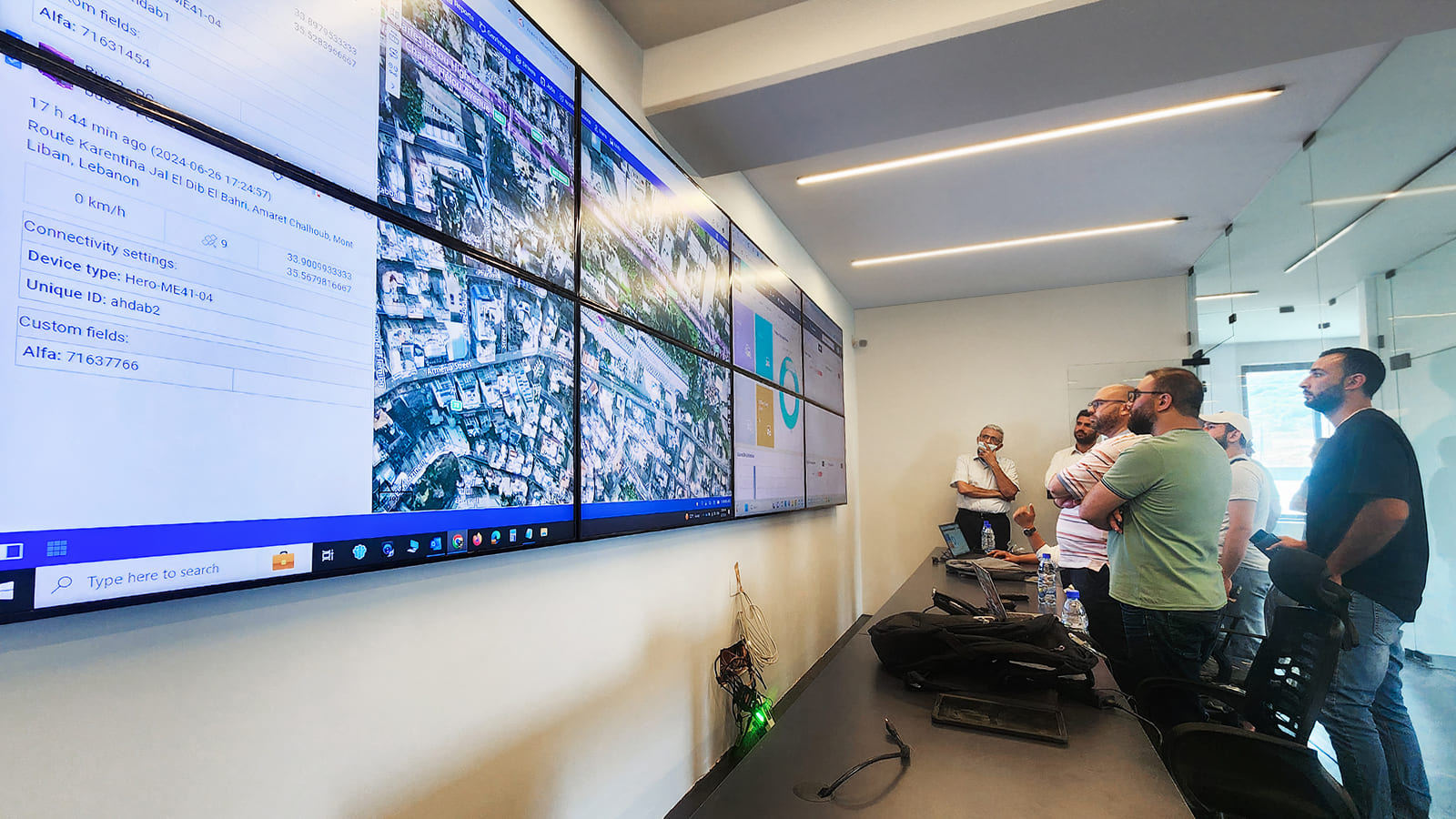
Control questions escalate into management questions very quickly.
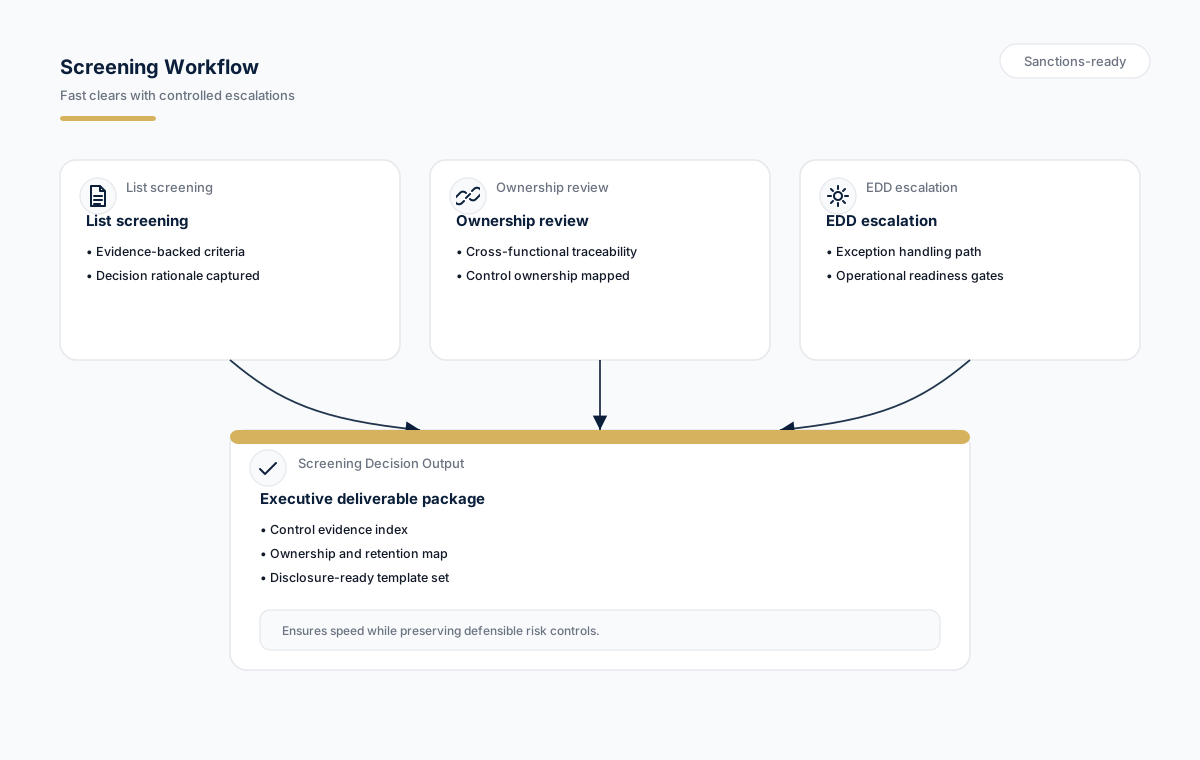
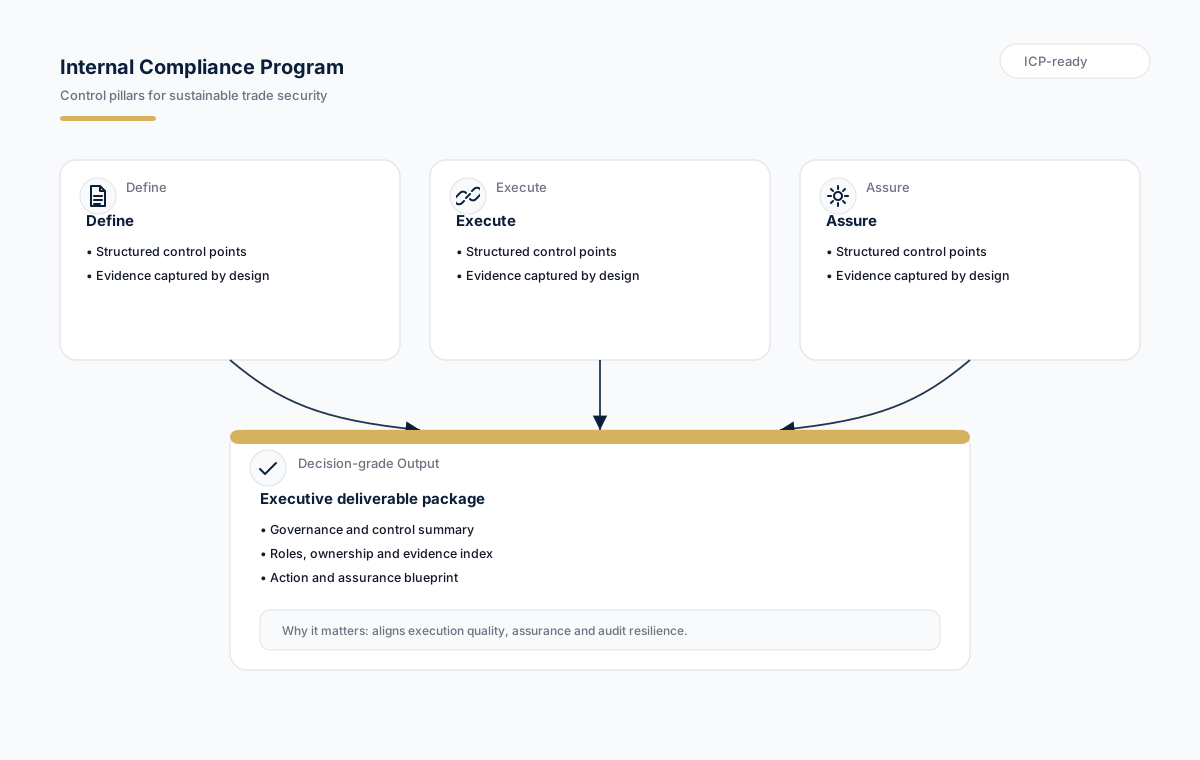
The diagrams remain below as technical support; the page now leads visually with a stronger institutional and cross-border setting.
Sanctions, ownership and route sensitivity become visible in live corridors.
The service is shown as a release model that has to survive real trade pressure, not as an abstract compliance note.
| Control theme | What usually goes wrong | What the mandate stabilises |
|---|---|---|
| Product and jurisdiction logic | EU, UK and US-facing rules are read in isolation, leaving the team unsure which product facts or US-origin links materially change the answer. | We translate classification, technical attributes, destination, end-use and US-origin exposure into one release logic the business can actually operate. |
| Counterparty and ownership review | Screening stays too shallow, missing ownership and control structure, route sensitivity or payment context that may change the risk profile. | The file is rebuilt around explainable escalation thresholds, clearer ownership review and a better record of why the transaction was released, paused or rejected. |
| ICP and management governance | Approval rights are unclear, evidence retention is inconsistent and later reviewers cannot reconstruct who accepted what under time pressure. | The mandate clarifies approval lanes, evidence standards, audit memory and the point at which export-controls questions must move from operating issue to management issue. |
| US specialist capability | US export controls are either ignored or overclaimed, rather than used only where EAR, ITAR, de minimis or direct-product logic genuinely changes the risk answer. | The site now shows US capability as a concrete specialist layer inside cross-border mandates, not as a slogan and not as the only market focus. |
Need a control model that can stand up under urgency, audit and cross-border complexity?
We scope export-controls work around the real decision chain: product facts, counterparties, jurisdictions, routes and escalation rights.
How US export-controls capability is framed
The site does not present US export controls as the only focus, and it does not treat them as a decorative badge either. They are framed as a specialist capability that becomes relevant when extraterritorial exposure materially changes the answer for a UK- or EU-based business.
Client-facing outcome
The objective is a cleaner release model, sharper escalation thresholds, better ownership review and records that remain usable in audit, internal review or later regulator-facing dialogue.